The Absurdity and Resilience of Boris Björkelund’s Memoir
Updated: Mar 23
A Life Between Empires
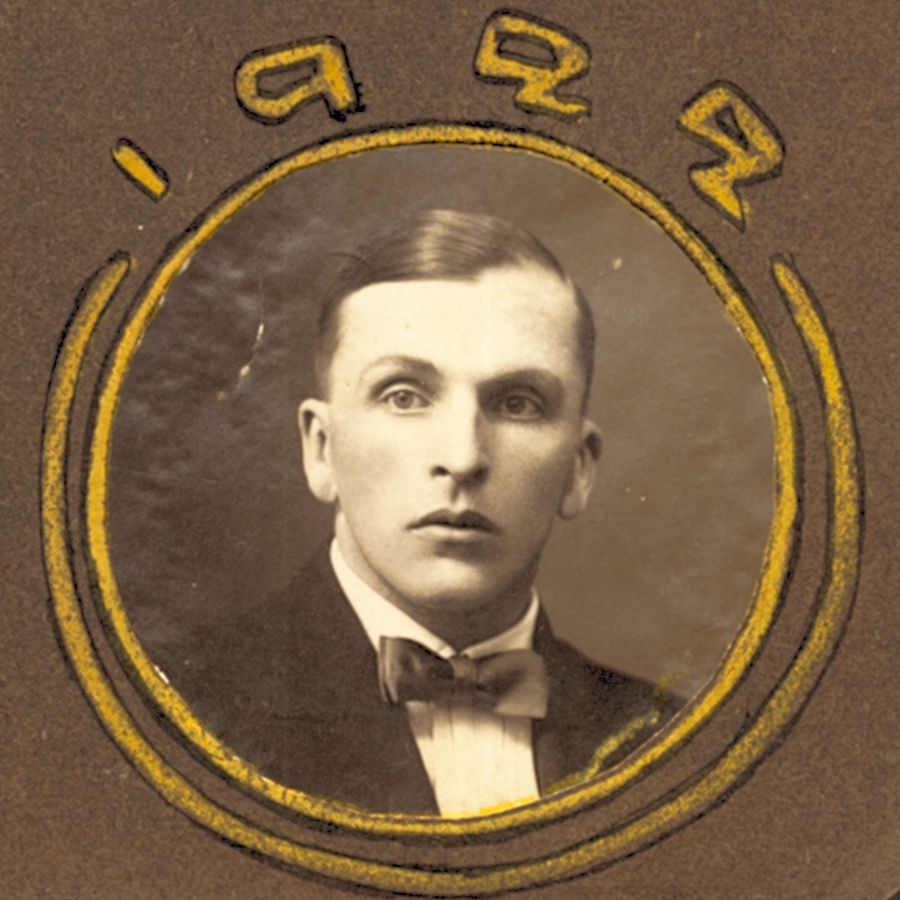
Boris Vladimirovich (or Voldemarovich) Björkelund was born in 1893 in St. Petersburg, Russia. He hailed from a Finland-Swedish family. During World War I, he served as an officer in the Russian Navy. His experiences during the war were harrowing. He was shell-shocked in battle against German ships and narrowly escaped death at the hands of revolutionary sailors in Petrograd in 1917.
In 1921, Boris became involved in the Finnish intelligence network. However, the so-called "Björkelund Group" ultimately failed. After emigrating to Finland, he joined the Finnish General Staff. There, he analyzed Soviet press materials. This work showcased both his sharp analytical mind and his deep understanding of the shifting politics of the region. He retired in 1938 and opened an antique shop alongside a small advertising business in Helsinki.
A Decade in the Gulag
Björkelund's life took a tragic turn in 1945. He became one of the so-called "Leino prisoners." This group consisted of 20 Finnish residents who were secretly handed over to the Soviets by the Communist Minister of the Interior, Yrjö Leino. Boris was sentenced to ten years in the Gulag. He endured imprisonment in Moscow and Leningrad’s most notorious jails. He also spent years in three labor camps located in the Northern Urals and Siberia. Later, he was confined in the infamous “Vladimir Central” and a special political prison near Moscow.
Even in these brutal conditions, Boris never lost his sharp mind or sense of irony. These qualities later shaped the remarkable tone of his memoir. In 1955, as a Finnish citizen, Boris returned to his new homeland. His devoted wife, Irina Romanovna Björkelund (née von Raupach), awaited him. Boris Vladimirovich wrote about all of this with surprising vividness and a certain humor. As a former naval officer, intelligence officer, and General Staff analyst, he provided a detailed analysis of Stalin's entire prison camp system in his book. His tenacious memory allowed him to leave behind a vast gallery of verbal portraits of his comrades in misfortune.
The Book and Its Legacy
The Finnish edition of Boris's memoir appeared in 1966 to great acclaim. Nearly half a century later, the complete Russian version was published in 2014 by the St. Petersburg publishing house Russkaya Kultura. This hardcover book contains 448 pages, including a preface and detailed commentary by historian S.A. Mankov. It also features eight pages of color illustrations.
Irina Romanovna and the Memory of a Life
This publication was made possible thanks to the efforts of Irina Romanovna Björkelund. She lived a long life and cherished the memory of her husband. Born in 1908 in St. Petersburg, she passed away in 2010 in Helsinki. Irina was the daughter of Colonel Roman von Raupach, the last military prosecutor of the Grand Duchy of Finland. After the February Revolution, he was invited by Alexander Kerensky, head of the Provisional Government, to join the Extraordinary Investigative Commission of 1917. There, he examined high-profile court cases, including those of Grigori Rasputin and Georgy Gapon. Raupach soon relocated to Finland, where he became an informal leader of the Russian émigré community in the 1920s. He wrote his own memoir, also designed by D. Ivashintsov, in 2007.
Artist Dmitry Ivashintsov, who knew Irina personally, visited her at her Helsinki apartment in 2006 and 2008. Irina lived to be over a hundred, retaining a sharp mind and fluency in four languages. Her dedication ensured that Boris’s extraordinary story—a blend of tragedy, endurance, and quiet humor—would not be forgotten.
The Importance of Memory
Memory plays a crucial role in preserving the legacies of individuals like Boris Björkelund. His experiences in the Gulag and the subsequent reflections in his memoir provide insight into a tumultuous period in history. The act of remembering is not merely a personal endeavor; it serves a broader purpose. It allows future generations to understand the past and the complexities of human experience.
Boris's memoir stands as a testament to resilience. It illustrates how individuals can endure unimaginable hardships and still find ways to express their humanity. The juxtaposition of tragedy and humor in his writing invites readers to reflect on their own lives and the narratives they create.
Conclusion
Boris Björkelund’s Journey to the Land of All Possible Impossibilities is more than just a memoir. It is a powerful narrative that captures the essence of human resilience in the face of adversity. Through the lens of his experiences, readers gain a deeper understanding of the historical context and the personal struggles that shaped his life.
The collaboration between Dmitry Ivashintsov and Irina Romanovna Björkelund has ensured that Boris's story continues to resonate. It serves as a reminder of the importance of preserving history and the stories of those who lived through it. As art collectors and cultural institutions explore this remarkable memoir, they contribute to the ongoing dialogue about memory, resilience, and the human spirit.




Comments